Level 0 ETF basics · Part 2/15
What is an index? Rules instead of picks
An index is a rules-based list of securities that measures a market: the S&P 500 covers 500 large US firms, the MSCI World around 1,400 firms across developed markets. An ETF copies such an index instead of picking holdings itself.
Rules decide, not a manager
Every index has a written rulebook. It sets out which securities qualify at all (country, listing, minimum size, trading volume), how often the list is reviewed, and how weights are handed out. Membership follows from those rules.
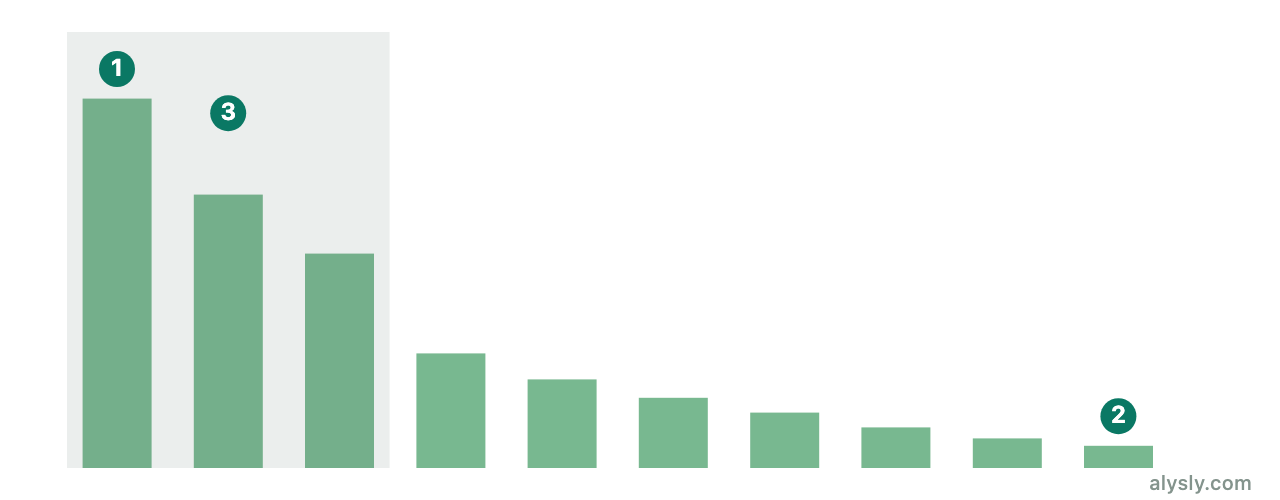
The most common approach is market-cap weighting: a company’s stock market value sets its share. When a price doubles, the share grows with it, and nobody intervenes.
A live example
Nobody picks the weights above. They follow the index rules and shift as prices move.
What follows from it
- The index decides what sits inside the fund and how concentrated it is. Under market-cap weighting a handful of large holdings carry a sizeable part of the move.
- Two ETFs on the same index are nearly identical inside. The differences are cost, income treatment and replication method — see ETF fees .
- How concentrated the MSCI World really is, the study Is the MSCI World too American? measures in detail.
- Every index we cover is listed in the indices overview .
Information only, not investment advice.