Level 0 ETF basics · Part 1/14
What are ETFs? Simply explained
An ETF (exchange-traded fund) is an investment fund that is bought and sold on a stock exchange like a single share. One unit does not represent a single company but a small slice of many companies at once.
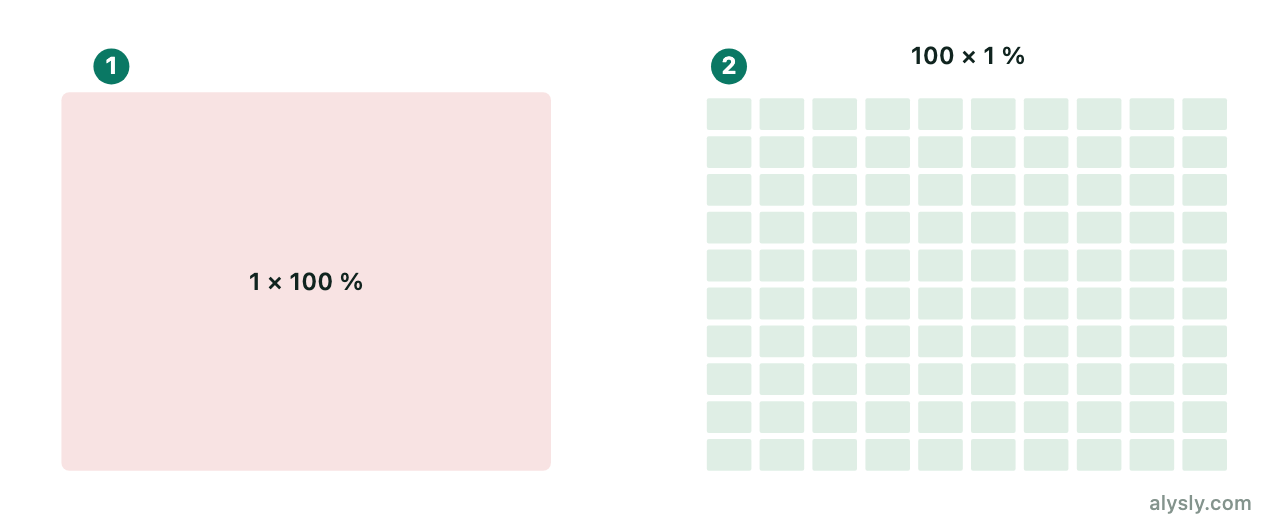
How an ETF works
Most ETFs track an index, for example the S&P 500 with 500 large US companies or the MSCI World with around 1,400 companies across 23 developed markets. Money in an MSCI World ETF is spread across all of them in proportion to their market value.
The ETF is passively managed: it follows the index instead of a fund manager picking individual stocks. That keeps costs low.
What sets ETFs apart
- Broad diversification: a world ETF spreads its capital across more than a thousand companies, so the failure of any single one has little effect.
- Low ongoing costs: annual fees (TER ) for broad index ETFs are often 0.10 to 0.25 %, a fraction of what actively managed funds charge.
- Transparency: the holdings can be checked at any time. Every ETF page on Alysly lists them.
- Tradability: ETFs can be bought and sold during exchange hours, including small amounts through a savings plan .
Diversification protects against the risk of individual companies, not against a decline in the market as a whole. A broad ETF can still lose a large part of its value in a crisis.
How the price stays close to the holdings
An ETF has two markets. On the exchange, investors buy and sell existing units among themselves. In the background, banks and trading firms known as authorized participants can create new units by delivering the underlying securities to the fund, or hand units back in exchange for those securities. If the exchange price drifts away from the value of the holdings, this process makes it profitable to close the gap. That keeps the price close to the net asset value (NAV) during trading hours.
Some ETFs do not hold the index stocks themselves. Synthetic ETFs replicate the index through a swap agreement with a bank. Most of the large index ETFs in Europe hold their securities physically.
ETFs, index funds and mutual funds
The terms overlap. An index fund is any fund that tracks an index, whether or not it is listed. A traditional mutual fund is bought from and sold back to the fund company once a day at the NAV. An ETF is a fund that also trades on an exchange during the day. Most ETFs are index funds, and every ETF is an investment fund, but a traditional fund cannot be traded on an exchange. Actively managed ETFs, where a manager selects the holdings, exist as well and make up a small part of the market.
When an ETF pays dividends
A distributing ETF collects the dividends of its holdings and pays them out, most often quarterly or twice a year, in some cases monthly or once a year. The fund sets the payment dates and publishes them. An accumulating ETF reinvests the dividends, so no payment reaches the investor and the fund’s value grows by that amount instead. The difference is explained in distributing vs. accumulating ETFs .
How ETF providers make money: the expense ratio
The total expense ratio (TER) is not billed separately. The fund deducts it gradually from its assets, so it is already included in the published NAV and in the ETF’s performance. At a TER of 0.20 %, a holding worth €10,000 costs about €20 a year as long as its value stays the same. Order fees at the broker and the spread between bid and ask prices come on top; ETF fees covers all of them.
Short selling and buying on margin
Because ETFs trade like shares, brokers can allow them to be sold short or bought with borrowed money (on margin). Whether that is available depends on the broker, the account type and the country. Both raise the risk: a short position can lose more than the amount put in, and a loan has to be repaid even if the ETF falls. The study why most traders lose money shows how quickly leverage turns an ordinary loss into a forced close-out.
When ETFs started: a short history
The first US ETF, the SPDR S&P 500 ETF Trust, started trading in January 1993. In Germany, ETFs have been traded on Xetra since April 2000.
What is actually inside
Every ETF page on Alysly shows the top holdings and the breakdown by sector and country. The ETF comparison shows how much two funds overlap.
The current composition of the MSCI World as an example:
This article is for information only and is not investment advice.