Level 0 ETF basics · Part 5/14
Distributing or accumulating ETFs? The difference
ETFs receive dividends from the companies they hold. What happens to those dividends is the key difference.
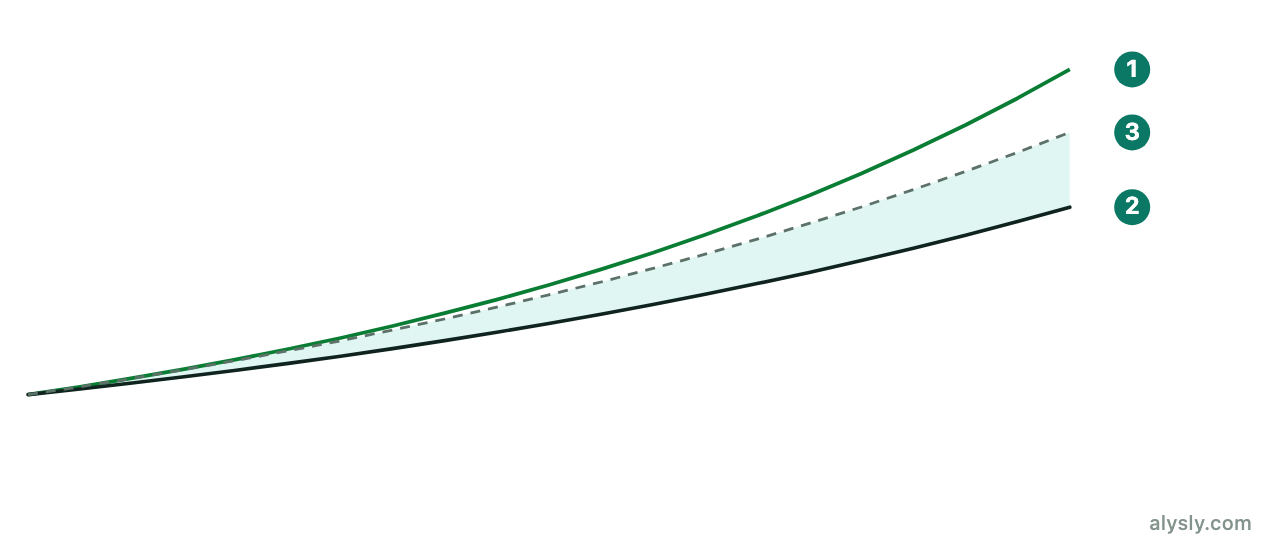
Distributing (“Dist” / “D”)
Dividends are paid out to the cash account regularly (e.g. quarterly). The money is freely available; it is only reinvested through a separate purchase.
Characteristics: a regular cash flow; a tax-free allowance is used directly by the payouts. Reinvesting may incur order fees.
Accumulating (“Acc” / “C”)
Dividends are automatically reinvested inside the fund. No cash is paid out; instead the value of the units rises.
Characteristics: compounding without any action; no ongoing cash flow. In Germany the Vorabpauschale advance tax may apply (see ETFs & tax ).
The differences at a glance
| Distributing | Accumulating | |
|---|---|---|
| Dividends | paid to cash account | stay in the fund |
| Reinvestment | by own purchase | automatic |
| Ongoing income | yes | only by selling units |
| Taxation in Germany | on payouts | Vorabpauschale |
| Effort | a bit more | low |
Every ETF page shows under “Distribution” whether an ETF distributes or accumulates. Many indices exist in both variants – identical inside, only dividend handling differs.
This article is for information only and is not tax or investment advice.