Level 0 ETF basics · Part 7/14
The Rule of 72: estimating doubling time
The Rule of 72 is an approximation: 72 divided by the annual return in percent gives roughly the years until a sum doubles.
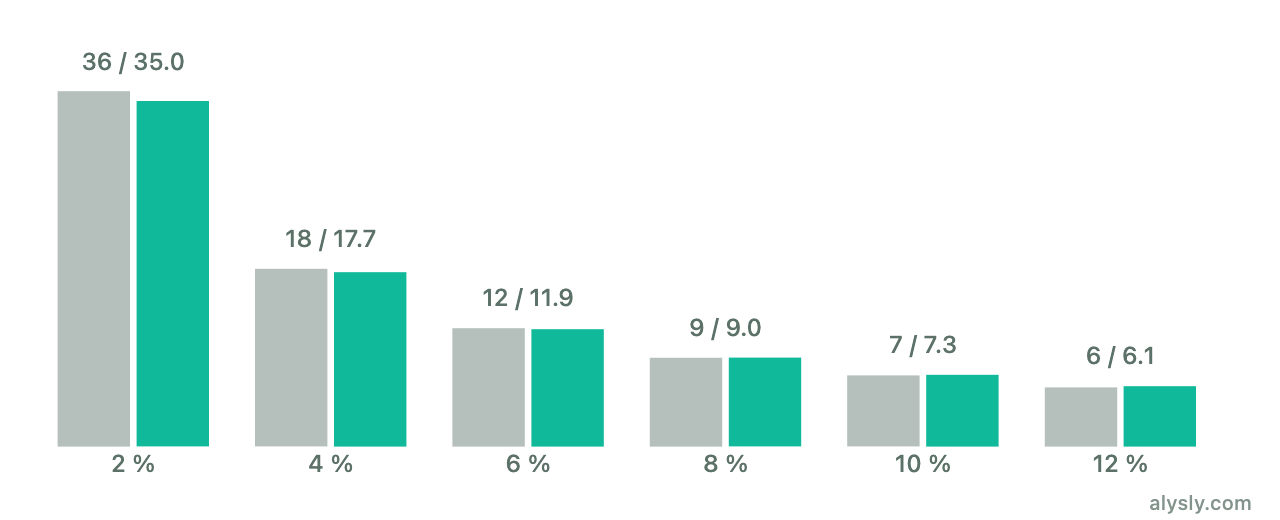
- 6 % → 72 / 6 = 12 years
- 8 % → 72 / 8 = 9 years
- 4 % → 72 / 4 = 18 years
The rule assumes a constant return, which markets never deliver. It does show how strongly a few percentage points of return or cost, and the length of the holding period, change the outcome over decades.
The savings-plan calculator gives the exact figure; the fee article shows how ongoing costs stretch the doubling time.
Information only, not investment advice.