Level 0 Investing & ETF Basics · Part 11/16
Sector ETFs: A Single Industry in One Fund
A sector ETF holds only companies from one industry instead of the whole market. The opportunities and risks of that industry pass through to the fund unfiltered.
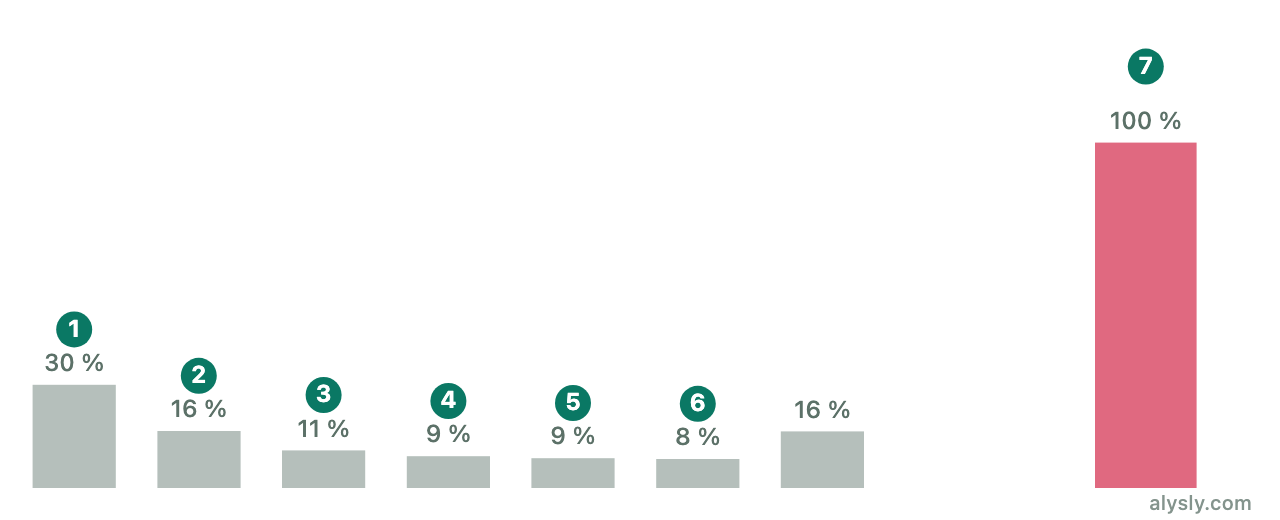
An example on Alysly is consumer staples (makers and sellers of everyday goods):
- Xtrackers MSCI USA Consumer Staples: the top holdings (Walmart, Costco, Procter & Gamble …) show how few names shape such a fund.
In Context
- In portfolios, sector ETFs usually serve as an addition to a broad core, rarely as the whole portfolio.
- Concentration in one industry often means considerably larger swings than a world ETF.
- Large sector names are usually already in the broad index; the ETF comparison shows how much two funds overlap.
How Sectors Are Defined
Most sector ETFs follow the Global Industry Classification Standard (GICS) from MSCI and S&P Dow Jones Indices. It sorts companies into eleven sectors, from information technology through health care and financials to utilities and real estate. Each company belongs to exactly one sector. The assignment can change: in 2018, for example, Alphabet and Meta (then Facebook) moved from information technology to the new communication services sector.
Why Sector Indices Are Often Capped
In some sectors, a few companies make up most of the market value. European retail funds (UCITS), however, must follow diversification rules. An index fund may generally hold at most 20% in a single issuer, 35% in exceptional cases. Sector ETFs therefore often track a capped index version in which the weights of the largest stocks are limited. The fund then looks different from the uncapped sector that index providers show in their charts.
Cyclical and Defensive
Sectors react differently to the business cycle. Industrials, materials and consumer discretionary count as cyclical; their sales rise and fall with the economy. Consumer staples, health care and utilities count as defensive, since demand for them swings less in downturns. The sector pages show how the sectors of the US stock market are made up.
Information only, not investment advice.