Money and retirement books: behaviour, spending, property and the exit
A portfolio is a means, and these books are about the ends. How much you save is a behaviour, not an income level. How much you spend, and on what, decides whether the saving was worth doing. And at some point the whole thing has to be converted back into a life — which is a harder problem than accumulation, because it comes with a deadline you cannot see.
The property titles sit here rather than in the investing group on purpose: buying rentals is a business with tenants, repairs and financing, not a line in an asset allocation. Every entry says who the book is written for and, where it is selling something, that too — this corner of the market has more conflicted authors than any other on this site.
The purchase links on this page are Amazon affiliate links: as an Amazon Associate we earn from qualifying purchases, and the price is the same for you either way. Which titles appear here, and what is written about them, does not depend on it. The links open Amazon's German store in English — that is the marketplace our affiliate account belongs to.
9 titles, 9 of them with our own assessment.
Every assessed title carries a rating from 3 to 5 points. The scale starts at 3: books we consider weak are not listed here. Five points are awarded by hand to titles that hold up over years; the strongest of those are marked as an Alysly Book Pick. The order on this page follows our internal ranking across all 29 titles.
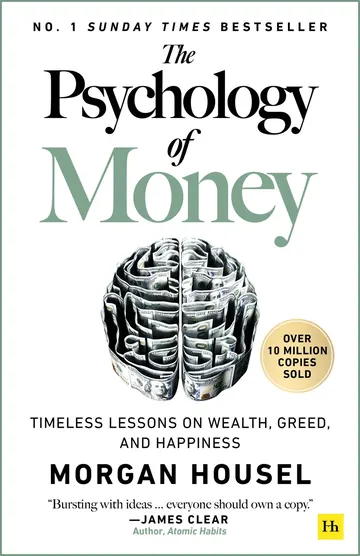
The Psychology of Money
Timeless Lessons on Wealth, Greed, and Happiness
5/5 · rank 4 of 29
Morgan Housel · 2020 · Harriman House · Paperback · ISBN 9780857197696
Nineteen short essays on how people actually behave with money: why saving is a behaviour rather than an income level, why luck and risk are the same thing seen from opposite ends, and why “enough” is a number most people never put down on paper. No formulas, no portfolio advice, and that is deliberate. It is the best first book here for someone who is not ready to invest yet and only wants to stop making avoidable decisions with the money already in hand.
View on Amazon Affiliate link
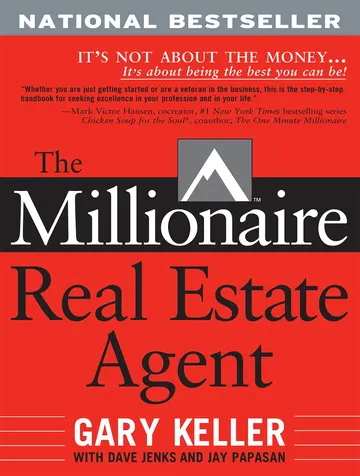
The Millionaire Real Estate Agent
It's Not About the Money — It's About Being the Best You Can Be
5/5 · rank 7 of 29
Gary Keller, Dave Jenks, Jay Papasan · 2004 · McGraw-Hill · Paperback · 368 pages · ISBN 9780071444040
A business-systems book aimed at estate agents: lead generation as a fixed daily habit, models for budgets, hiring and organisation, and the arithmetic of moving from selling houses yourself to running a team that does. The models are the transferable part and work in any commission business. It is dated on channels — written before portals and social media took over lead flow — and relentlessly upbeat. For investors rather than agents, its sibling volume is the relevant one.
View on Amazon Affiliate link
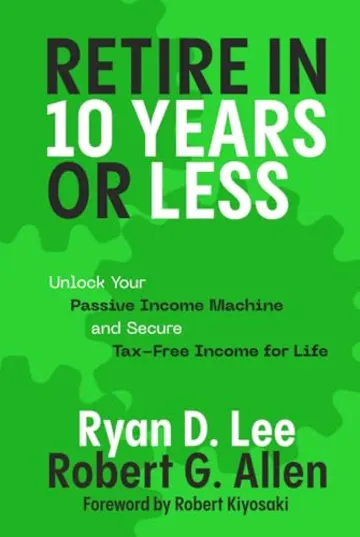
Retire in 10 Years or Less
Unlock Your Passive Income Machine® and Secure Tax-Free Income for Life
4/5 · rank 11 of 29
Ryan D. Lee, Robert G. Allen · 2025 · Hardcover · 302 pages · ISBN 9798264968648
A ten-year retirement plan built on permanent life insurance and leveraged rental property, packaged as a branded system and introduced by Robert Kiyosaki. Read it knowing what it is: the authors sell the products and the coaching the method requires, the tax-free income rests on policy loans whose cost is treated lightly, and the return assumptions are generous. It is listed here because it is heavily promoted and readers will meet it — check every number in it against an independent source.
View on Amazon Affiliate link
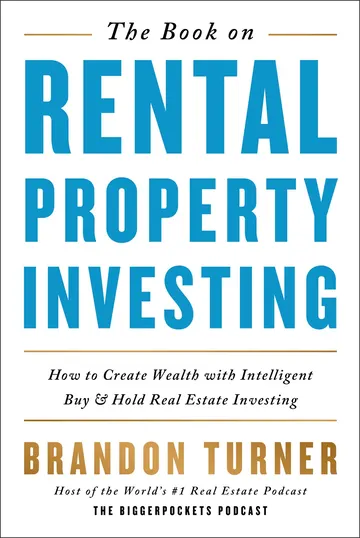
The Book on Rental Property Investing
How to Create Wealth and Passive Income Through Smart Buy & Hold Real Estate Investing
4/5 · rank 13 of 29
Brandon Turner · 2015 · BiggerPockets Publishing · Paperback · 341 pages · ISBN 9780990711797
The most practical of the three property books here: picking a market, running the numbers on a rental — cash flow, capitalisation rate, cash-on-cash return — finding and financing deals, and managing tenants once you own the place. Turner is honest about the workload and about the mistakes that sink beginners. It is entirely American on financing, taxes and landlord law, so a reader elsewhere keeps the analysis and replaces the mechanics.
View on Amazon Affiliate link
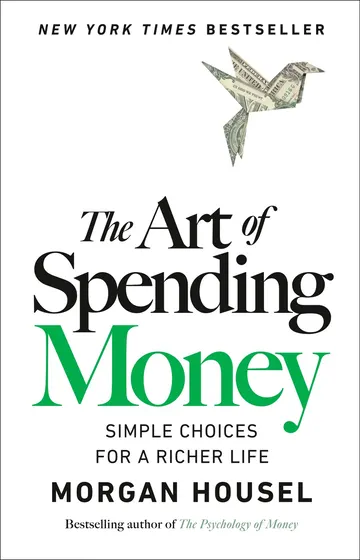
The Art of Spending Money
Simple Choices for a Richer Life
4/5 · rank 14 of 29
Morgan Housel · 2025 · Portfolio · Hardcover · ISBN 9780593716632
Housel's follow-up turns from earning and saving to spending: what people expect a purchase to do for them, how fast those expectations reset, and why comparison ruins more budgets than prices do. Same short-essay form as its predecessor, same preference for anecdote over data. If The Psychology of Money changed how you think, this refines one corner of it; if it left you cold, this will too. Read it as an essay collection, not as a guide to anything.
View on Amazon Affiliate link
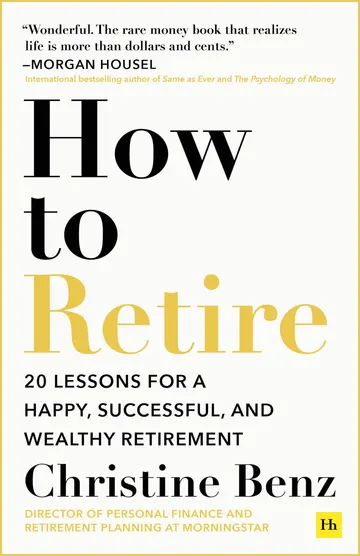
How to Retire
20 Lessons for a Happy, Successful, and Wealthy Retirement
4/5 · rank 16 of 29
Christine Benz · 2024 · Harriman House · Hardcover · ISBN 9781804090695
Twenty interviews with researchers and practitioners about the parts of retirement that arithmetic alone does not settle: withdrawal rates, sequence-of-returns risk, long-term care, when to claim state pensions, and what people do with the hours once work stops. Benz asks precise questions and lets her guests disagree with each other. The account and tax detail is American, so a reader elsewhere takes the reasoning. The soberest book in this group, and the counterweight to Perkins.
View on Amazon Affiliate link
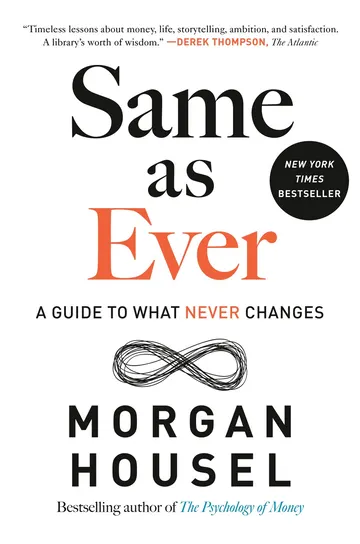
Same as Ever
A Guide to What Never Changes
4/5 · rank 18 of 29
Morgan Housel · 2023 · Portfolio · Hardcover · 256 pages · ISBN 9780593332702
Essays on the parts of human behaviour that do not change: risk arriving from where nobody was looking, stories beating statistics, progress feeling slower than decline does. Less about money than Housel's other two books and more about forecasting, and why so little of it works. It is a good antidote to confident macro predictions and thin if you want something to act on. The least useful of the three for an investor, the most enjoyable for a reader.
View on Amazon Affiliate link
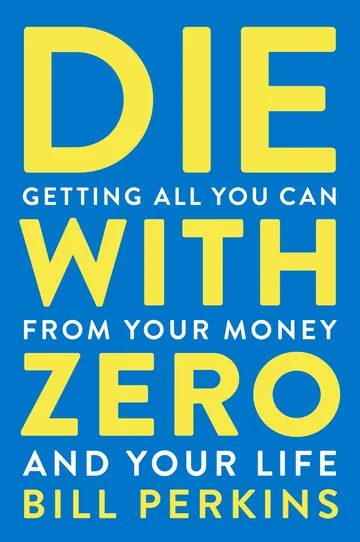
Die With Zero
Getting All You Can from Your Money and Your Life
4/5 · rank 22 of 29
Bill Perkins · 2020 · Houghton Mifflin Harcourt · Paperback · 240 pages · ISBN 9780358567097
An argument against saving indefinitely: money has to be turned into experiences while you are still able to have them, and dying with a large balance is a planning failure rather than a virtue. Perkins is deliberately provocative and waves away the two risks that make his advice hard to follow — living longer than planned, and needing care. Read it as a corrective if you save reflexively, next to a book that handles the sequencing seriously.
View on Amazon Affiliate link
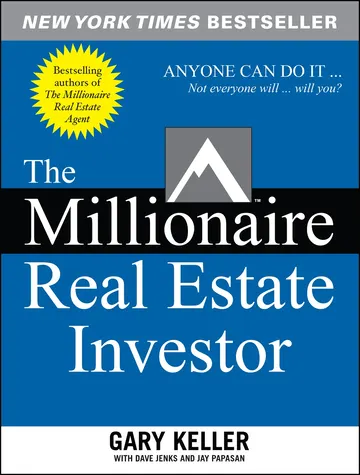
The Millionaire Real Estate Investor
3/5 · rank 27 of 29
Gary Keller, Dave Jenks, Jay Papasan · 2005 · McGraw-Hill · Paperback · ISBN 9780071446372
Built from interviews with more than a hundred American investors, this lays out criteria-driven buying: define a market, know the numbers that make a deal work, build a network that brings deals to you, then repeat the same process instead of improvising each time. The criteria transfer anywhere. The financing chapters and their leverage assumptions belong to the pre-2008 market and should be read with that date in mind. Use it as a way of thinking about a property, not as a plan.
View on Amazon Affiliate link