Trading books: charts, candlesticks and the psychology of the trade
Trading literature comes in three layers, and buying the same layer three times is the usual mistake. The first teaches the craft: what a trend is, what a candle says, how to read a chart without a story attached. The second turns that into a rulebook — entry, exit, position size, what happens after four losses in a row. The third deals with the person holding the mouse, because the rulebook is easy to write and hard to follow.
The titles below are sorted by that logic, not by how famous they are. Every entry says which layer the book belongs to, what prior knowledge it assumes, and where its age shows. Several are decades old and still worth reading; where a book's specific parameters have been public long enough for markets to adapt to them, that is written down instead of glossed over.
The purchase links on this page are Amazon affiliate links: as an Amazon Associate we earn from qualifying purchases, and the price is the same for you either way. Which titles appear here, and what is written about them, does not depend on it. The links open Amazon's German store in English — that is the marketplace our affiliate account belongs to.
9 titles, 9 of them with our own assessment.
Every assessed title carries a rating from 3 to 5 points. The scale starts at 3: books we consider weak are not listed here. Five points are awarded by hand to titles that hold up over years; the strongest of those are marked as an Alysly Book Pick. The order on this page follows our internal ranking across all 29 titles.
Alysly Book Pick
Read and recommended by Alexander Bock (Founder of Alysly.com)
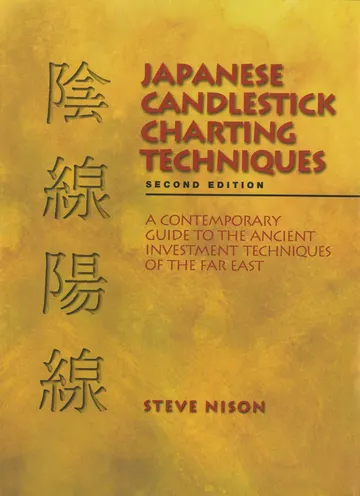
Japanese Candlestick Charting Techniques
A Contemporary Guide to the Ancient Investment Techniques of the Far East, Second Edition
5/5 · rank 2 of 29
Steve Nison · 2001 · Prentice Hall Press · Hardcover · ISBN 9781101659786
The book that brought candlestick charting to Western markets, and still the most careful treatment of it. Nison defines each pattern precisely, insists on the trend context around it, and says plainly that a doji or a hammer means nothing on its own. The second edition adds combinations with Western indicators. Two caveats: the historical framing runs long, and single-pattern claims have held up poorly under later statistical testing — which is an argument for testing them yourself, not for skipping the book.
View on Amazon Affiliate link
Alysly Book Pick
Read and recommended by Alexander Bock (Founder of Alysly.com)
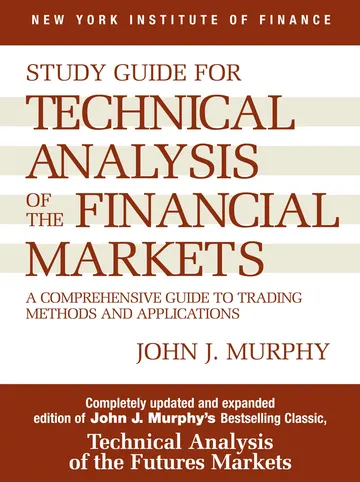
Study Guide to Technical Analysis of the Financial Markets
A Comprehensive Guide to Trading Methods and Applications
5/5 · rank 3 of 29
John J. Murphy · 1999 · New York Institute of Finance · Paperback · ISBN 9781101659205
A question-and-answer companion to Murphy's textbook, chapter by chapter, with chart exercises to work through. It only makes sense next to the main volume — on its own it is a set of answers to questions you have not read. Worth the money if you learn by being tested rather than by reading, or if you are preparing for a market-technician exam. Everyone else is better off spending the same hours on real charts with the textbook open.
View on Amazon Affiliate link
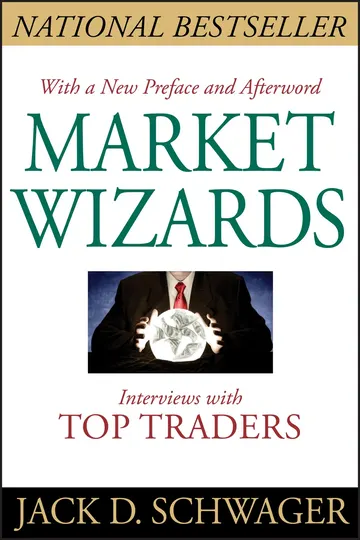
Market Wizards, Updated
Interviews with Top Traders
5/5 · rank 5 of 29
Jack D. Schwager · 2012 · John Wiley & Sons · Hardcover · 480 pages · ISBN 9781118273050
Seventeen interviews with traders who made their money in the futures, currency and stock markets of the 1970s and 1980s, with new commentary in this updated edition. The value is not in the methods, which contradict each other flatly, but in what survives the contradiction: sizing, cutting losers early, and being able to say why a position was taken. Read it for the pattern across the interviews, not for a system — and read it before the psychology books, because it shows the problems they try to solve.
View on Amazon Affiliate link
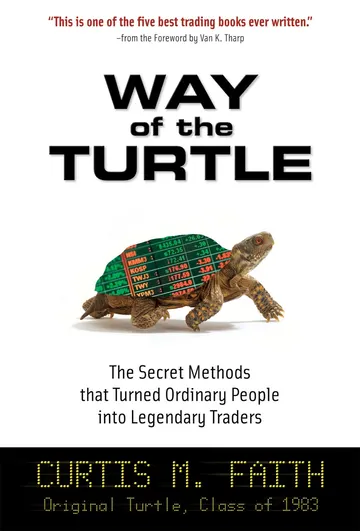
Way of the Turtle
The Secret Methods that Turned Ordinary People into Legendary Traders
5/5 · rank 6 of 29
Curtis Faith · 2007 · McGraw-Hill · Hardcover · 286 pages · ISBN 9780071486644
An insider account of the Turtle experiment, in which Richard Dennis set out to prove that trading could be taught by teaching a trend-following system to novices. Faith publishes the rules — breakout entries, volatility-based sizing, hard exits — and, more usefully, what it felt like to follow them through long losing stretches. Treat the parameters as history: they have been public for decades and markets adapt. The chapters on risk and on expectancy age far better than the system does.
View on Amazon Affiliate link
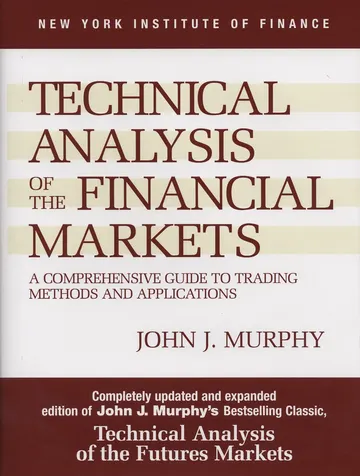
Technical Analysis of the Financial Markets
A Comprehensive Guide to Trading Methods and Applications
5/5 · rank 8 of 29
John J. Murphy · 1999 · New York Institute of Finance · Hardcover · 576 pages · ISBN 9780735200661
The reference work of chart-based analysis: trend, support and resistance, reversal and continuation patterns, moving averages, oscillators, volume, intermarket relationships, point-and-figure, Elliott waves. Murphy explains each tool cleanly and never promises that it works. It is a textbook you look things up in for years, not a strategy you follow. Its examples predate electronic markets and intraday data volumes, which shows. Still the first book to own in this group, and the one the others assume you have read.
View on Amazon Affiliate link
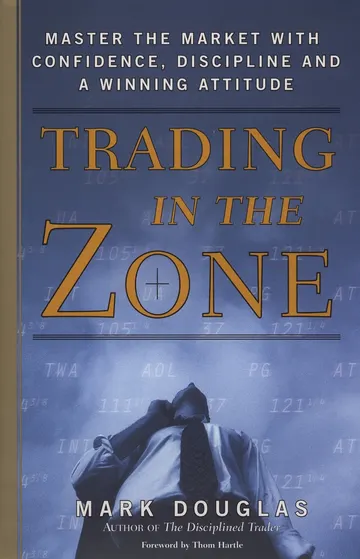
Trading in the Zone
Master the Market with Confidence, Discipline and a Winning Attitude
5/5 · rank 9 of 29
Mark Douglas · 2000 · Prentice Hall Press · Hardcover · ISBN 9780735201446
The standard text on trading psychology and the source of the “think in probabilities” framing that the rest of the field borrows. Its central exercise is to treat any single trade as one draw from an edge with positive expectancy, which is what separates a mechanical trader from someone taking each loss personally. Short on markets, long on mindset, repetitive by design. It gives no entries and no exits, so pair it with a method book rather than reading it alone.
View on Amazon Affiliate link
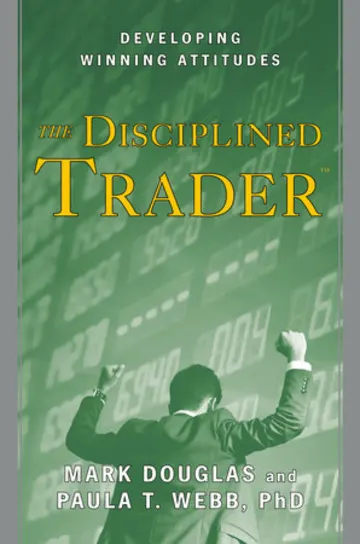
The Disciplined Trader
Developing Winning Attitudes
5/5 · rank 10 of 29
Mark Douglas · 1990 · New York Institute of Finance · Hardcover · 239 pages · ISBN 9780132157575
Douglas's first book, and the rougher of his two. The argument is that most trading losses are self-inflicted: the trader carries expectations into a place that owes him nothing. Half the book builds a general theory of belief and perception before it reaches the market, which slows it badly. If you read one Douglas, read Trading in the Zone. This one is for readers who want the reasoning before it was compressed into a framework, and who do not mind the detour.
View on Amazon Affiliate link
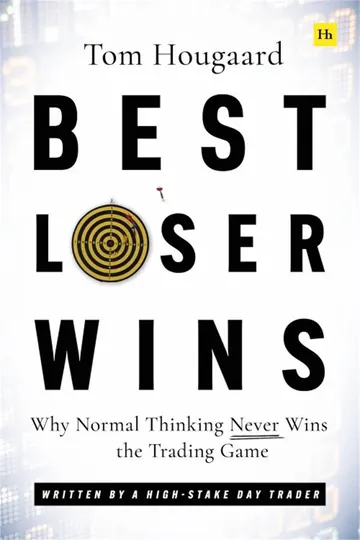
Best Loser Wins
Why Normal Thinking Never Wins the Trading Game
4/5 · rank 21 of 29
Tom Hougaard · 2022 · Harriman House · Paperback · ISBN 9780857198228
A high-stakes day trader's account of why his results only improved once he stopped trading the way the books told him to. The argument: the instincts that feel prudent — banking small gains, holding losers, cutting size after a win — are backwards for someone who trades for a living. Strong on self-observation and on what a real drawdown does to judgement. Weak as instruction: there is no system here, and the size he trades makes his experience hard to copy directly.
View on Amazon Affiliate link
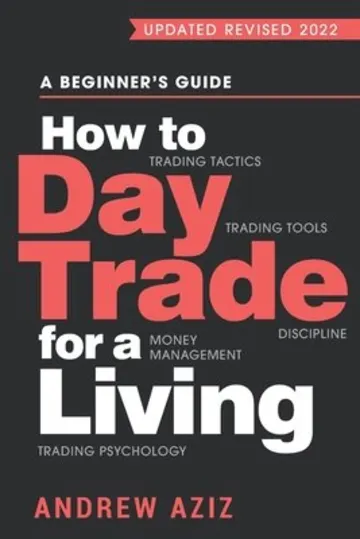
How to Day Trade for a Living
A Beginner's Guide to Trading Tools and Tactics, Money Management, Discipline and Trading Psychology
4/5 · rank 24 of 29
Andrew Aziz · 2016 · Independently published · Paperback · 136 pages · ISBN 9781535585958
A short, practical introduction to intraday stock trading: order types, level 2, float and catalyst-driven setups, risk per trade, and the routine of a trading day. It is the cheapest clear starting point for the mechanics and it says openly that most beginners lose money. What it is not is evidence that the setups work — they are described, not tested, and the book doubles as the entry point to the author's paid community. Take the vocabulary, verify the rest.
View on Amazon Affiliate link